

Ever wonder why some chicken dishes make you worry about food safety? Cooking chicken to 165°F is more than just for flavor, it kills harmful germs like Salmonella and Campylobacter. A meat thermometer gives you a quick, clear sign that your chicken is safe to eat. This simple temperature check transforms a risky meal into a delicious, worry-free plate.
Safe Internal Chicken Temperature for Food Safety
USDA says chicken must hit 165°F inside to kill harmful bugs like Salmonella and Campylobacter. This rule covers all chicken types, whether it's a whole bird, breasts, thighs, wings, or ground chicken. The science behind this is called time-temperature pasteurization. In simple terms, when chicken reaches 165°F, dangerous germs die right away.
Food safety depends on hitting that exact number. The best way to check is by using a food thermometer in the thickest part of the meat, making sure it isn’t touching any bone. Relying on the color of the juices or the meat’s look can be deceptive. In the past, cooks who depended only on visual cues often ended up with unsafe food. This shows why a clear temperature reading is so important.
Following the 165°F rule helps reduce the risk of foodborne illness and meets strict USDA and FDA standards. This science-based target matters for everyone, from those grilling at home to professional chefs. With a proper temperature check, you can serve chicken that is both delicious and safe to enjoy.
Using a Meat Thermometer to Verify Chicken Temperature
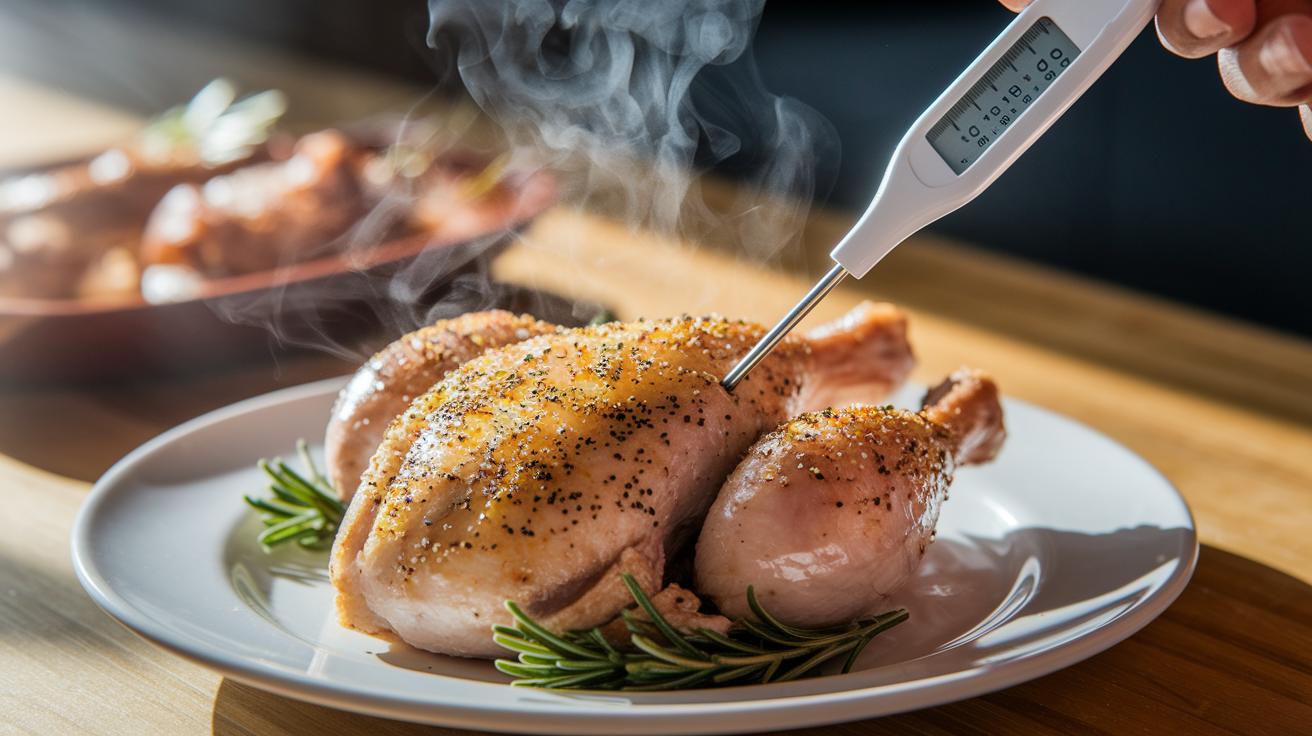
Don't rely on chicken's color or texture to tell you it's cooked. A meat thermometer gives you a clear reading so you know the chicken has reached a safe temperature and any harmful germs are gone.
Here’s how to do it right:
- First, check that your thermometer is accurate.
- Insert it into the thickest part of the chicken, staying away from bones.
- Wait about 10 to 15 seconds until the reading stops changing.
- Test several spots if the chicken has uneven pieces.
- Clean the probe after each use.
Using a good quality thermometer, like an instant-read or a wireless model, not only makes cooking easier but also lowers the risk of spreading germs. Following these simple steps helps ensure your chicken is both delicious and safe.
Safe internal chicken temperature for food safety
To keep your food safe, chicken needs to hit 165°F. This temperature comes from time-temperature pasteurization science. Once the chicken reaches 165°F, its proteins break down quickly, killing harmful bacteria like Salmonella and Campylobacter.
For accuracy, always use a calibrated meat thermometer. Stick it into the thickest part of the chicken, away from bones, to get a true reading instead of judging by color or texture.
If you suspect your thermometer might be off, try this simple test:
| Test method | Expected reading |
|---|---|
| Ice water | 32°F |
| Boiling water (sea level) | 212°F |
One local restaurant found their thermometer was a few degrees off, so the chicken never reached 165°F. They recalibrated it with an ice water and boiling water test, making sure their readings matched USDA guidelines.
- Place the thermometer in the thickest part.
- Check it in ice water and boiling water if you're not sure.
Using a Meat Thermometer to Verify Chicken Temperature
Simply looking at color and texture doesn’t tell you if chicken is done. A meat thermometer is the best way to check if it’s cooked safely.
- First, check that your thermometer is calibrated or accurate.
- Stick the thermometer into the thickest part of the chicken, steering clear of any bones.
- Give it 10 to 15 seconds before you read the temperature.
- If your pieces vary in size, check a few spots.
- Always clean the probe after every use.
For quick and accurate results, opt for a calibrated instant-read or wireless probe model. Think of it this way: a good thermometer is to your chicken what a compass is to a traveler.
Time-Temperature Pasteurization Guidelines for Chicken Safety
Standard 165°F Instant Pasteurization
When chicken hits 165°F, harmful bacteria like Salmonella and Campylobacter are killed right away. This method follows USDA guidelines. Simply insert a calibrated food thermometer into the thickest part of the meat (stay away from the bone) to check that you reach 165°F. This quick, high-heat method ensures your chicken is safe to eat and helps keep lean cuts like breasts and wings juicy without long cooking times.
155°F Holding Method
Another safe method is to hold chicken at 155°F for at least 15 seconds. This approach also reduces pathogens while maintaining a moist texture. It works well for cooks who want to keep the meat tender and delicious. For dark cuts like thighs and legs, aim for 175°F. The extra heat helps break down connective tissue, making the meat even more tender. Understanding these two methods lets you choose the best technique to keep your chicken both safe and tasty.
Temperature Chart for Chicken Cuts: Breasts, Thighs, and Wings
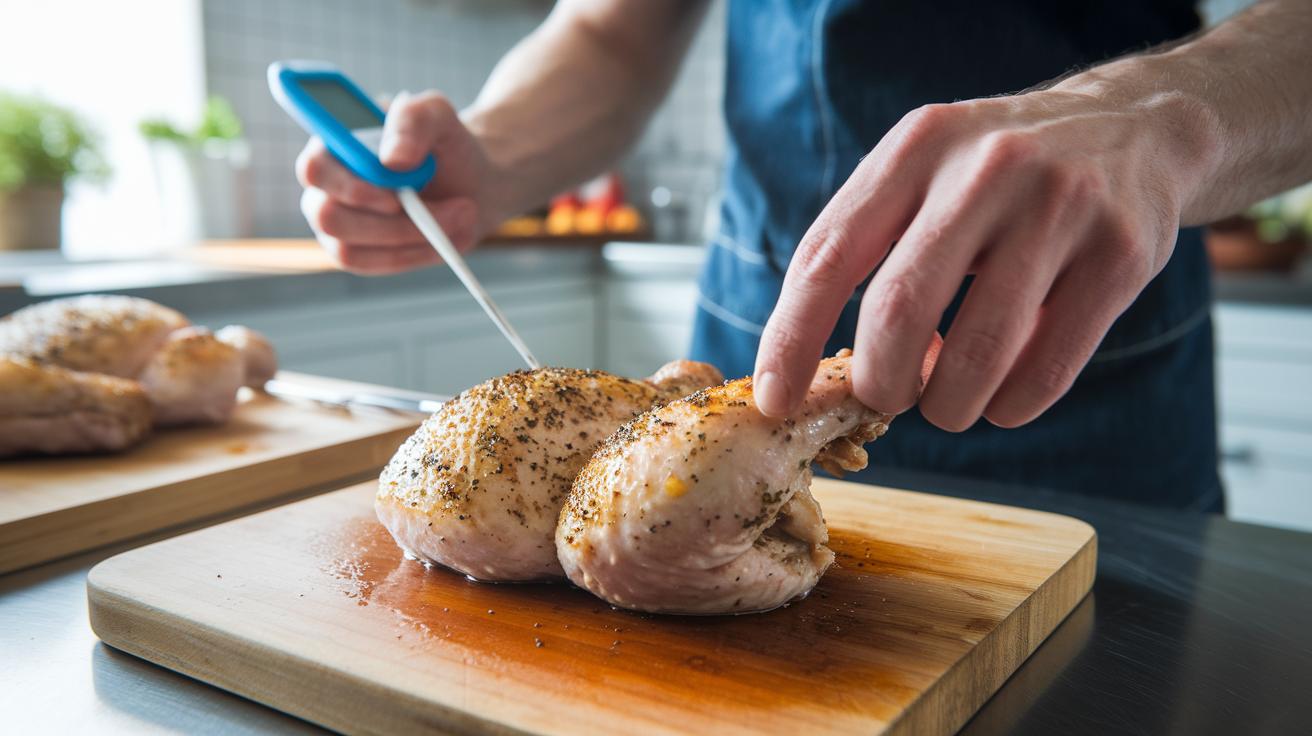
Different chicken cuts need specific temperatures to be safe and delicious. For lean cuts like breasts, a target of 165°F kills bacteria while keeping the meat tender. Dark meat such as thighs and legs does best at 175°F because the extra heat helps break down connective tissue, giving it a softer texture. With wings, aim for 165°F and check a few spots, especially near the joints, to make sure nothing is undercooked.
After cooking, the meat will rise in temperature by 3–5°F during a resting period. Let the chicken sit uncovered for 5–10 minutes. This practice helps finish pasteurization and locks in moisture for a juicier bite.
Below is a simple chart to guide you toward perfectly cooked, safe chicken every time:
| Chicken Cut | Target Temp | Notes |
|---|---|---|
| Breast | 165°F | Rest 5–10 min uncovered |
| Thigh/Leg | 175°F | Breaks down connective tissue |
| Wing | 165°F | Test multiple spots, especially near joints |
Carryover Cooking and Resting Times for Chicken Doneness
When you take chicken off the heat, its inner temperature can rise by 3-5°F as the warmth moves inward. This extra heat helps finish cooking any parts that weren’t quite done and keeps the meat moist, much like a warm soup that blends its flavors together.
Let the chicken sit for 5-10 minutes while loosely covering it with foil. This rest time lets the juices spread evenly throughout, ensuring every bite is tender, evenly cooked, and safe to eat.
Preventing Cross-Contamination and Misleading Doneness Indicators
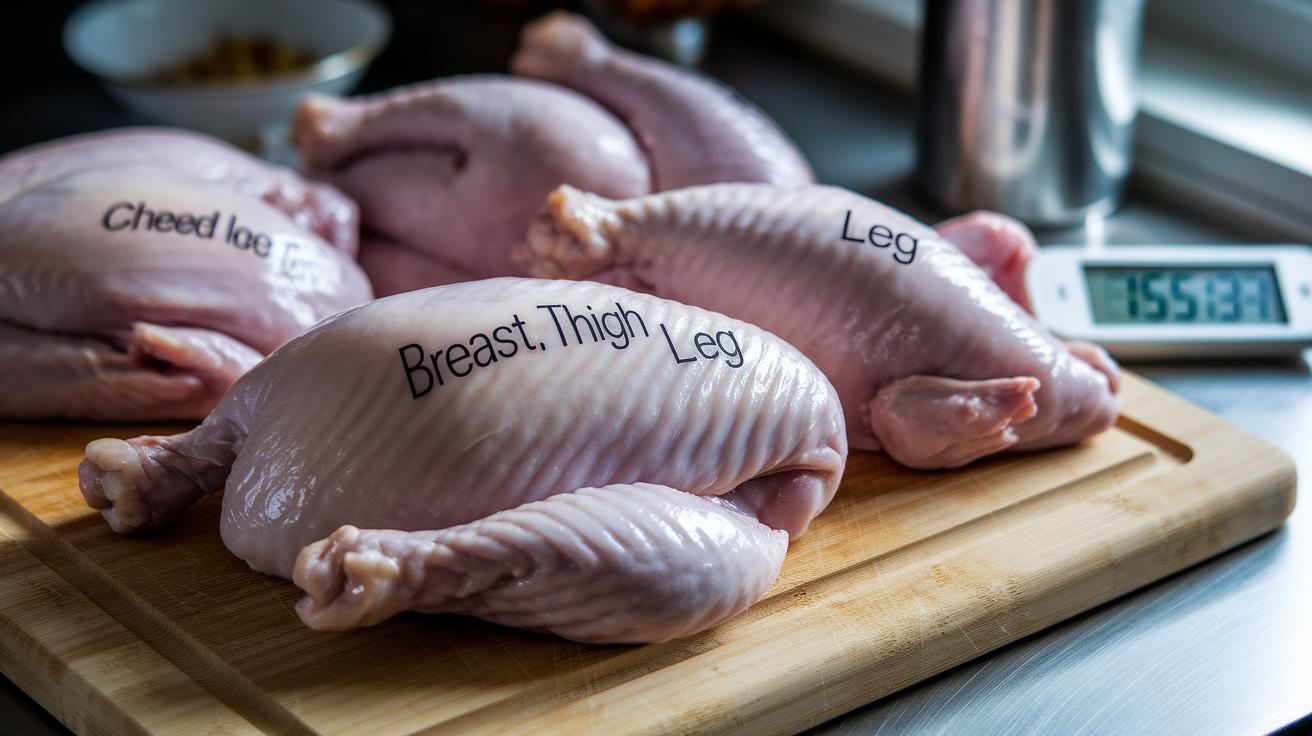
Raw chicken can carry dangerous germs in its juices. To keep your food safe, avoid mixing raw chicken with ready-to-eat foods at every step of food preparation. Many people think that clear juices or white meat means the chicken is done, but only a food thermometer can give you the right temperature reading.
Here are some key tips to follow:
- Wash cutting boards, knives, and plates with hot soapy water right after they touch raw chicken.
- Keep raw poultry away from foods that will be eaten without cooking.
- Sanitize your hands and surfaces immediately after handling raw chicken.
- Use a properly calibrated food thermometer to check that the chicken reaches the target temperature; visual cues often mislead.
- Keep raw items separate from cooked foods during both prep and storage.
By sticking to these practices, you lower the risk of spreading bacteria like Salmonella and Campylobacter. Remember, the chicken's color is not a trusted sign of safety. Always check with a thermometer to be sure your food is safe to eat. These precautions keep your meals delicious and protect everyone at the table.
Final Words
In the action, the post laid out key steps for safe chicken handling. It covered how to reach the proper chicken food safety temperature of 165°F and even explored alternative methods. It showed how to use a thermometer and follow accurate pasteurization and resting practices. Clear charts and tips guarded against cross-contamination. This knowledge helps ensure healthy dishes while keeping operations on track. Every step adds value to daily food prep, keeping meals safe and delicious.
FAQ
What do food safety temperature charts show for chicken and meat?
The food safety temperature charts show that chicken breasts should reach 165°F (74°C) and dark meat about 175°F. These charts, often available as PDFs, help ensure safe cooking by listing recommended temperatures.
What temperature is needed for safely cooking frozen chicken?
Frozen chicken should be thawed and then cooked until its internal temperature reaches 165°F (74°C) to kill harmful bacteria and make it safe to eat.
What temperature indicates that chicken breast is properly cooked?
The recommended safe temperature for chicken breast is 165°F (74°C). This level ensures that any harmful bacteria are destroyed, making the meat safe for consumption.
Are temperatures like 50°F or 60°F sufficient for safe chicken?
Chicken is not safe at 50°F or 60°F. It must be cooked until it reaches an internal temperature of 165°F (74°C) to effectively kill harmful bacteria.
What temperature kills Salmonella in chicken?
Reaching an internal temperature of 165°F (74°C) kills Salmonella in chicken, ensuring that the meat is safe by instantly neutralizing harmful pathogens.