

Do sugar-free foods still pack a flavor punch? This article looks at five favorites made with aspartame, a sweetener that gives snacks and drinks their sugary taste with fewer calories. Aspartame has been a key player in low-calorie options since 1981. From fizzy drinks to guilt-free treats, these products show that cutting sugar doesn't mean cutting flavor. Check out these picks to see if they might change the way you enjoy sugar-free treats.
5 food products with aspartame: Delightful Picks
Aspartame is a popular ingredient in many sugar-free foods and drinks. It goes by familiar names like NutraSweet, Equal, or Sugar Twin. Since its mass production began in 1981, aspartame has played a big role in helping people enjoy sweetness without the extra calories. Today, around 75% of sugar substitute sales use aspartame.
Food makers add aspartame to keep the flavor rich in drinks and snacks while cutting down on sugar. This means you get the sweetness you love without the added calories.
Here are some common products that use aspartame:
- Coca-Cola Zero
- Pepsi Max
- Sprite Zero
- Sugar-free gum
- Sugar-free candy
- Protein bars
- Low-calorie yogurts
- Chewable vitamins
- Sugar-free jelly
- Sugar-free pudding
- Breath mints
- Frozen ice pops
A small amount of this high-intensity sweetener is enough to give that burst of flavor, making it a smart substitute for sugar. This lets manufacturers offer products that suit a reduced-sugar lifestyle while still tasting great.
Detecting Aspartame on Food Labels
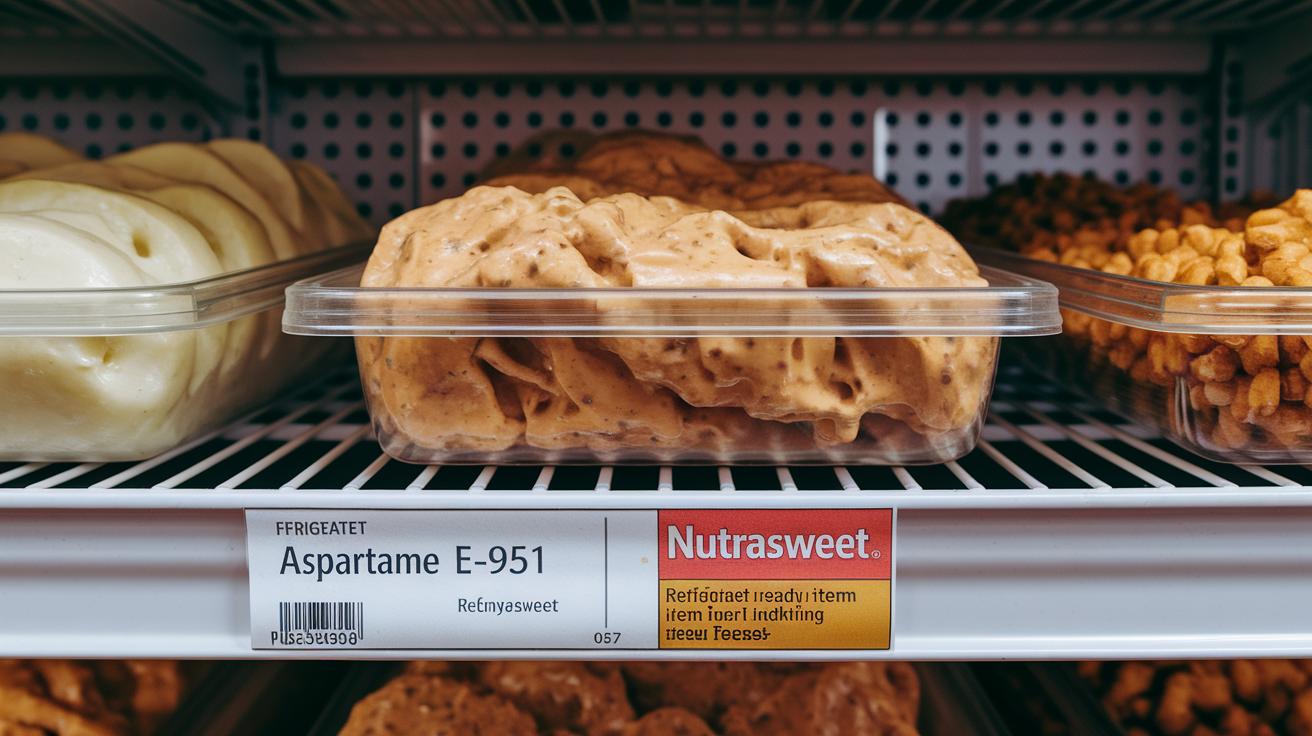
Aspartame shows up on food labels as "aspartame" or by its code E951. It may also appear under names like NutraSweet, Equal, or Sugar Twin. Products that include aspartame also carry a warning about phenylalanine, which is important for people with PKU. Since aspartame breaks down when heated, you'll usually find it in ready-to-eat meals or refrigerated items rather than in goods meant for baking.
Here’s a quick way to spot aspartame on food labels:
- Look for E951 on the ingredient list.
- Check for well-known names like NutraSweet, Equal, or Sugar Twin.
- Watch for a warning about phenylalanine, which hints at aspartame.
- Notice if the label mentions that the product is not meant for baking because it can’t handle high heat.
These tips help you quickly identify aspartame in processed foods.
Aspartame in Beverages, Snacks, and Desserts
Aspartame is a low-calorie sweetener that replaces sugar in many products. Its power means a tiny amount delivers a strong, sweet taste without the extra calories.
Beverages
Diet sodas like Coca-Cola Zero, Pepsi Max, and Sprite Zero use aspartame for a crisp, refreshing flavor without sugar. Sugar-free juices and protein drinks also rely on it to keep calories low while adding a clean, sweet kick. Just a few milligrams stand in for a lot of sugar, making drinks both light and tasty.
Snacks
Sugar-free gum, candies, and protein bars use aspartame to pack a sweet punch. A small dose mimics the flavor of much larger amounts of sugar. This lets snack makers create low-calorie treats that still deliver on sweetness.
Desserts
Frozen treats, jellies, and low-calorie yogurts often include aspartame for their signature flavor. Since it breaks down at high temperatures, it's best for products served cold or at room temperature. This makes it a popular choice in icy pops and ready-to-eat puddings, offering a satisfying sweetness in a calorie-conscious way.
Nutritional Profile and Aspartame Dosage Analysis

Aspartame is a super sweet ingredient that packs four calories per gram while being nearly 200 times sweeter than sugar. Because it is so strong, makers use just tiny amounts to give foods a burst of sweetness without adding extra calories. This is why you often find it in sugar-free products.
The FDA classifies aspartame as safe to eat (labeled as GRAS) and sets a daily limit of 50 milligrams per kilogram of body weight. In contrast, the Joint FAO/WHO Expert Committee recommends a daily limit of 40 mg per kilogram. For someone weighing 150 pounds, that works out to about 2,700 to 3,400 milligrams per day. To put it simply, that is roughly the same as drinking 14 to 17 twelve-ounce cans of diet soda sweetened with aspartame.
These guidelines show that even a small amount of aspartame can deliver a lot of sweetness without pushing your calorie intake above safe levels.
Health Risks and Safety Standards for Aspartame in Food Products
In 2023, the International Agency for Research on Cancer flagged aspartame as possibly carcinogenic to humans based on animal studies. However, the FDA and other agencies say that eating aspartame at approved levels does not increase cancer risk. Regulators set safe daily limits after thorough safety checks and follow strict food safety practices (https://matpple.com?p=1010) to ensure that a little bit of aspartame gives a lot of sweetness without exceeding safe amounts.
People with phenylketonuria (PKU) must avoid aspartame because they cannot process its phenylalanine component. Some consumers report headaches and dizziness after consuming aspartame, though these reactions are not common to everyone. Ongoing research and consumer petitions keep the debate alive over its long-term effects, with critics asking for closer checking of its use in food.
Current reviews agree that products with aspartame are safe when eaten within the recommended limits. Still, the mix of reported side effects and the possibility of long-term risks means that officials keep studying it to be sure.
Comparing Aspartame to Sugar and Natural Sweeteners

Aspartame is an artificial sweetener that is about 200 times sweeter than sugar and carries 4 calories per gram. This means manufacturers can use just a tiny bit to add a strong sweet taste without adding many calories. Regular sugar, however, adds both volume and extra energy due to its lower sweetness level. Another alternative, saccharin, is between 200 and 700 times sweeter than sugar, yet some people find its flavor a bit bitter.
On the natural side, sweeteners like stevia and monk fruit extract offer a plant-based option. Stevia provides about 200 times the sweetness of sugar without any calories, while monk fruit extract can range from 10 to 250 times sweeter. Both of these fit well for folks who want sweeteners with fewer synthetic ingredients.
When choosing a sugar substitute, consider how you plan to use it. Aspartame is not a good pick for heated recipes because it loses its sweetness at high temperatures. It works best in cold dishes and drinks. On the other hand, natural options may be the way to go if you are aiming for a cleaner label or prefer plant-based ingredients.
Final Words
In the action, the post broke down key topics such as common food products with aspartame, label checks, and product comparisons. The article explained aspartame’s use in beverages, snacks, and desserts. It also laid out the nutritional profiles and safety benchmarks so you know what to watch for.
This clear rundown equips you to make smart, fast decisions. Stay on top of ingredient lists and menu trends with these insights for food products with aspartame, and let this guide spark your next step forward.
FAQ
What food products typically contain aspartame?
Common products with aspartame include diet sodas, sugar-free gum, candies, protein bars, low‐calorie yogurts, chewable vitamins, and similar items. Manufacturers use it as a no‐sugar sweetener for lower‐calorie options.
Where can I find lists of food products containing aspartame?
Detailed lists—including printable versions—are available online and in dietary guides. They cover many products like diet beverages, sugar‐free treats, and low‐calorie desserts marketed with aspartame.
Do eggs contain aspartame?
Eggs do not naturally contain aspartame. This artificial sweetener is added to processed foods, so eggs remain free from it unless deliberately mixed in an unusual recipe.
How can I avoid aspartame in food products?
You can avoid aspartame by carefully reviewing ingredient labels for “aspartame,” “E951,” “NutraSweet,” “Equal,” or “Sugar Twin.” This helps steer clear of many sugar‐free or low‐calorie items where it is used.
Where is aspartame banned?
Aspartame is banned or restricted in some countries based on local food regulations. Certain nations limit its use in baby foods or specific beverages, so reviewing local guidelines is key.
What types of food products marketed as healthy might use aspartame?
Some low‐calorie or “healthy” marketed products, like yogurts and diet beverages, use aspartame to reduce sugar content. While they aim to support a lower‐calorie diet, they still contain a synthetic sweetener.
What is considered the most unhealthy artificial sweetener?
There is no clear consensus on a single “most unhealthy” sweetener. Each artificial sweetener has a defined safe consumption range, so following official guidelines is recommended when choosing any of them.